Learn Für Elise and remember it.
Can you read sheet music and have a digital piano? Clef checks your notes as you play, tracks what you remember, and shows you what to practice next.


No credit card required
Listen to it played
Is Für Elise right for your level?
This piece is rated early intermediate. Pay particular attention to the stormy second episode and the chromatic run back into the theme.
If you can read treble and bass clef slowly, you can start this piece today. Clef never advances until you play the right note, so slow is fine, and it can print every sharp and flat directly on the note if you want it to.
- Harder than
- ArabesqueGymnopédie No. 1
How you’ll learn it
01
The score answers you
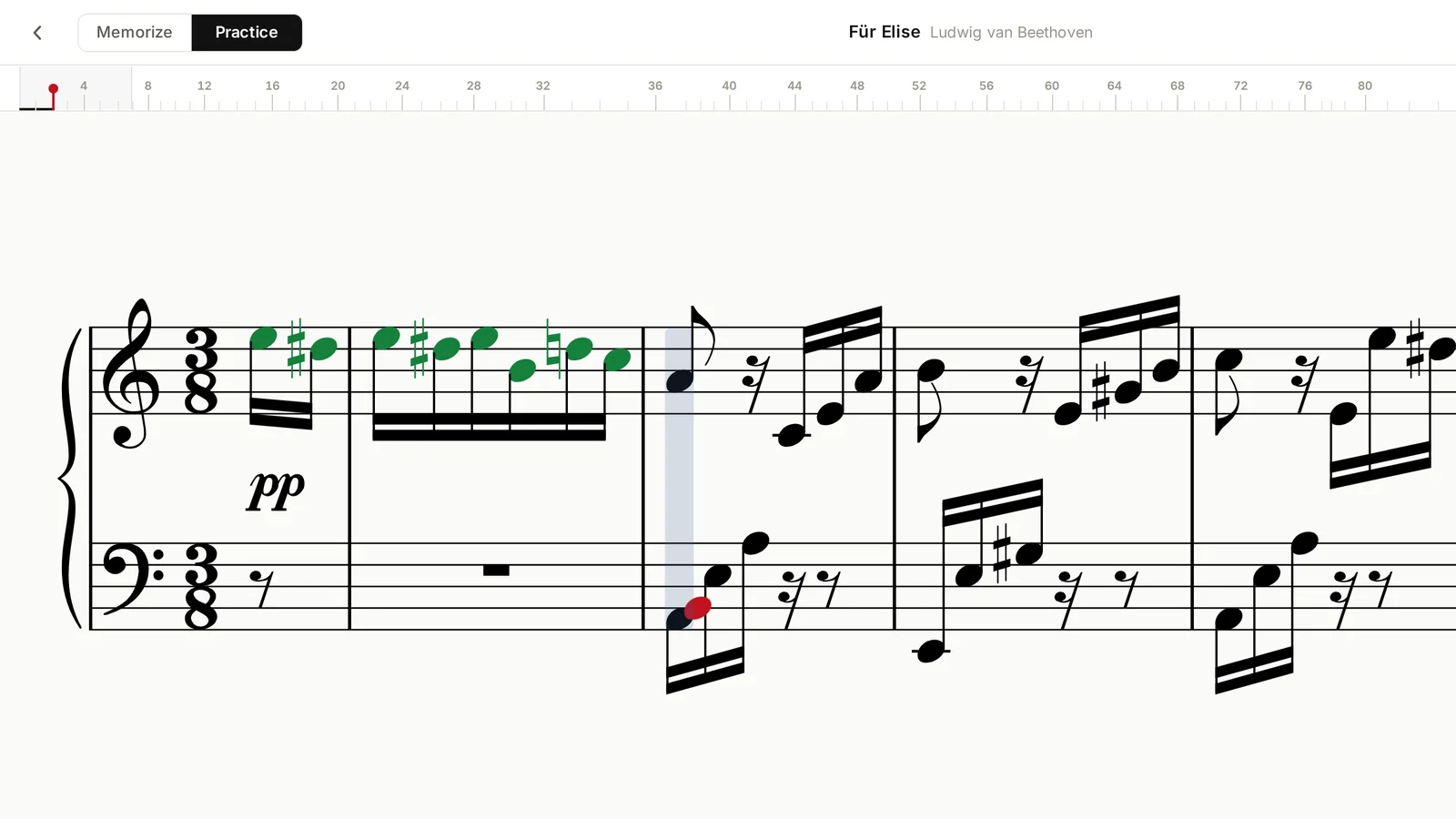
Play Für Elise from the real engraving. Right notes turn green under your fingers; a wrong one is flagged red where you played it. Nothing advances until the bar is right, so there is no way to practice a mistake without noticing.
02
Then you learn it by heart
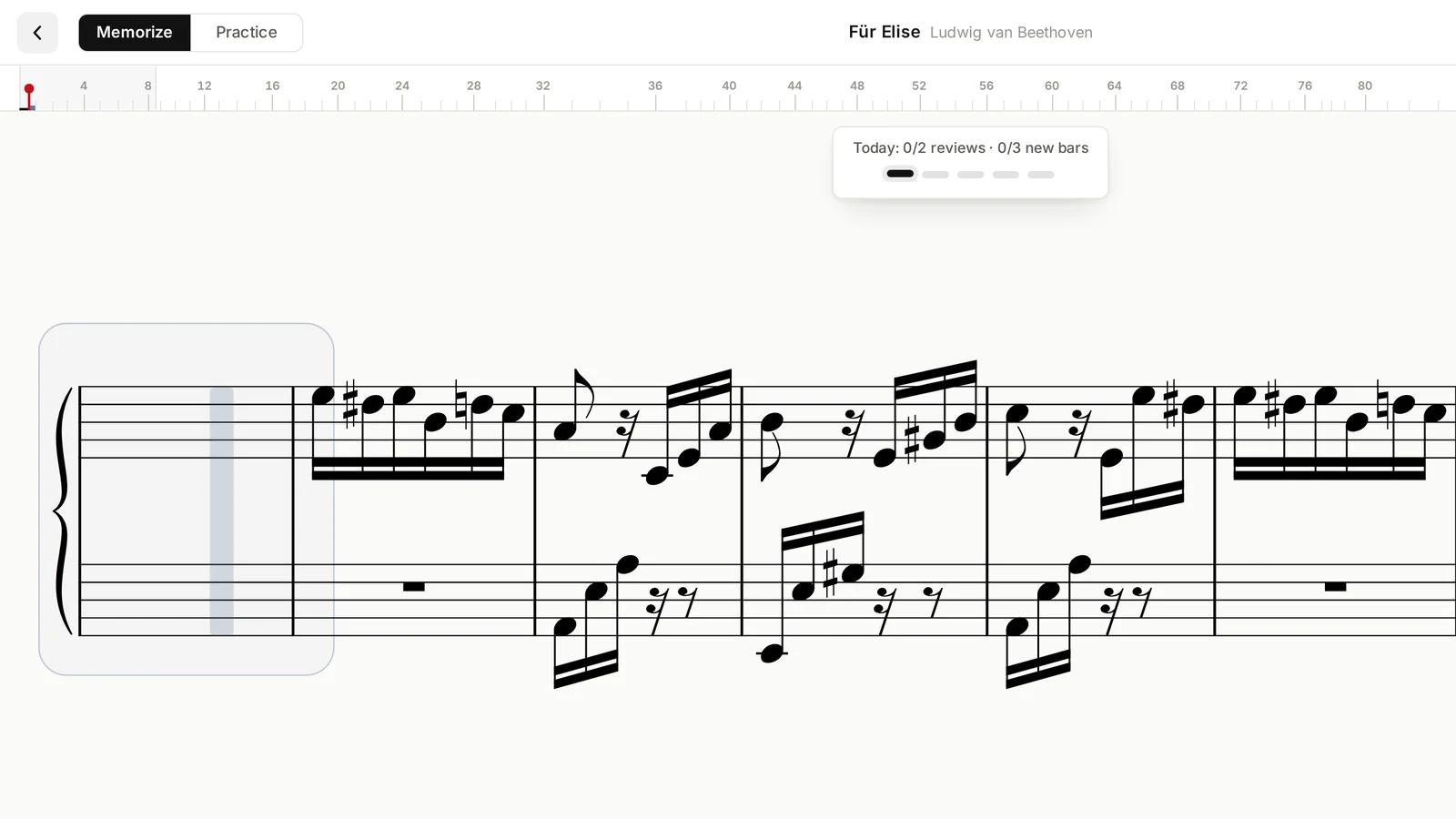
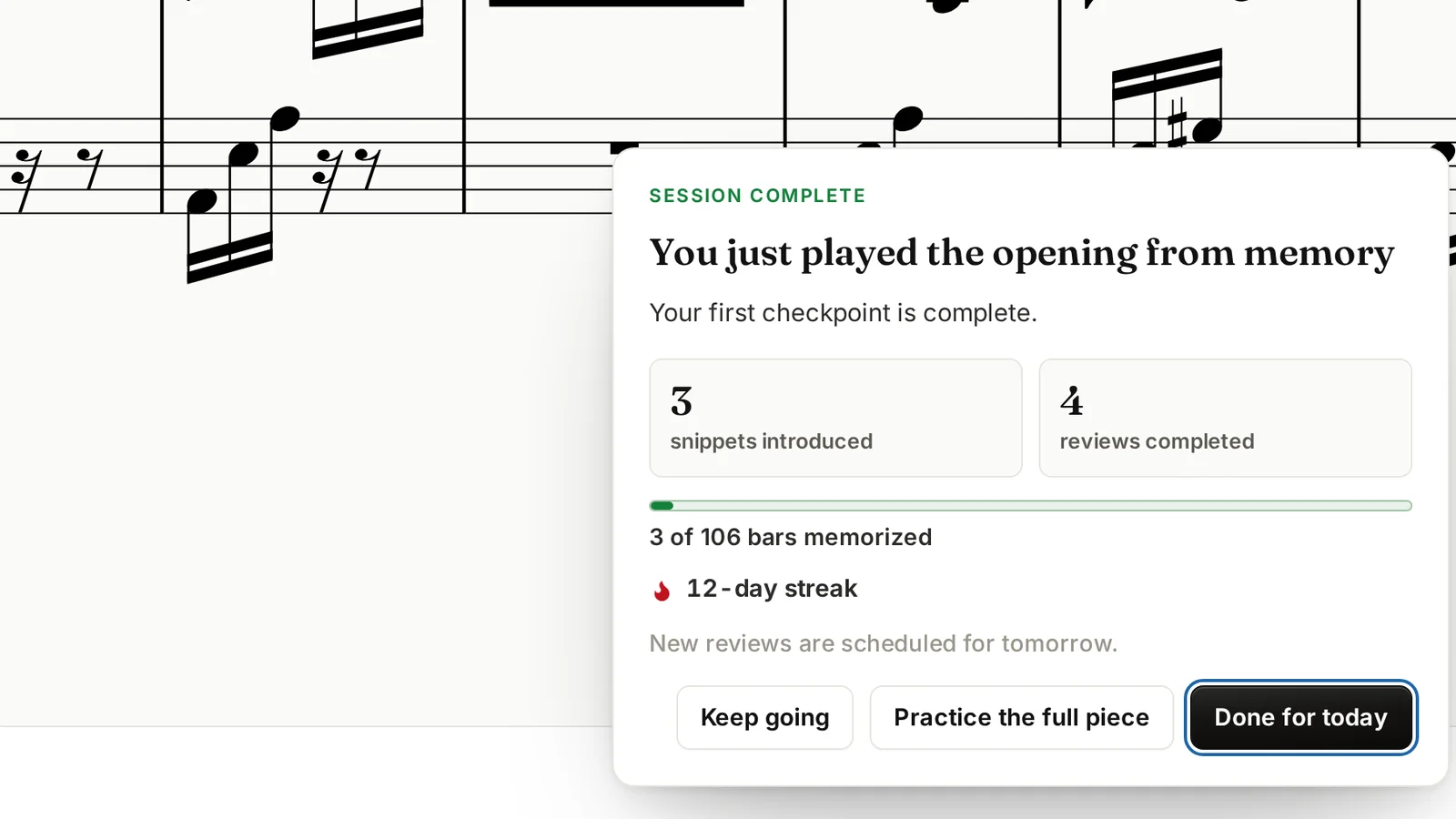
Switch to memory work and memorize it bar by bar. 106 bars, each one a short from-memory challenge. Clef shows the bar before, hides the one you are learning, and waits.
03
Each bar comes back before it slips
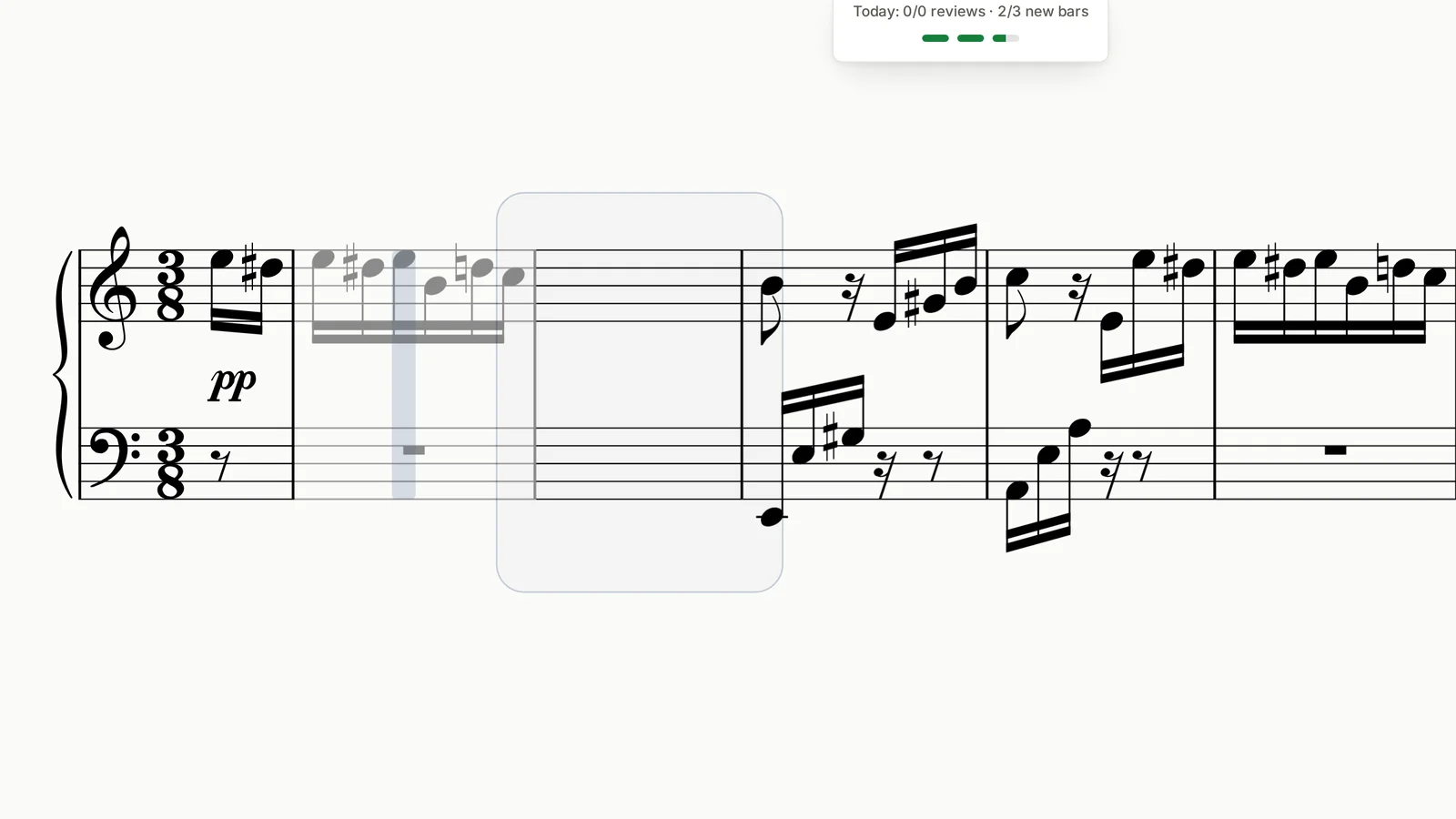
Every bar you have learned is scheduled to return just before you would have forgotten it. The bars you struggle to recall come round more often than the parts that stuck.
04
Checkpoint runs weld it together
Learning bars separately is not the same as playing the piece. Clef first checks short groups from memory, then joins neighboring groups into progressively longer runs until the whole section connects.
What you need
- A digital piano or keyboard.
- Either a phone, tablet or a laptop.
- A cable that connects your piano to your device (usually the same kind a printer uses).
- Optional: If you want to practice on a phone or a tablet, you might need an USB-C adapter.
Questions about Für Elise
How hard is Für Elise?
This piece is rated early intermediate. Expect some faster notes, moving your hands around a bit more, and playing both hands together. To give you an idea, it's harder than Arabesque, but a bit easier than Pathétique, 2nd mvt.
How long is Für Elise?
106 bars, about 2 minutes of music at a steady tempo. In Clef the total length matters less than the daily rhythm: you learn a few new bars a day and replay the ones that are due, so 10–20 focused minutes covers a session.
Can I learn Für Elise as a beginner?
If you have a little playing behind you, yes. You need to read both clefs slowly and manage hands together. You do not need to be fast, because Clef moves at whatever speed you play.
Do I need to read sheet music?
Slow reading is enough. Clef puts the real engraved score on screen and never advances until you play the right notes, so you can work out a bar at your own pace. Because it is real notation rather than falling bars, the reading you build here transfers straight to paper.
Learn Für Elise and still remember it a month from now.
Start today, and let the reviews keep it. The keyboard you already own does the listening.
Start playing freeNo credit card required